

Building Carer Friendly Communities Through Better Housing Design
Carers Week is a reminder that millions of unpaid carers across the UK provide vital support every day. Behind every carer is often a home that either makes caring easier or makes it harder.
As demand for care continues to grow, housing providers, local authorities and occupational therapists have an important role to play in creating carer friendly communities. Accessible homes, thoughtful design and timely adaptations can help people remain independent for longer while reducing pressure on carers, health services and social care.
At PROCare, we see first hand how the right home adaptation can transform daily life for both residents and carers.

Why Carer Friendly Communities Matter
The UK is facing increasing pressure from an ageing population, rising levels of disability and a shortage of suitable housing.
Many unpaid carers are supporting loved ones in homes that were never designed with accessibility in mind. Everyday tasks such as washing, toileting and moving safely around the home can become physically demanding and emotionally exhausting when the environment does not support the person's needs.
Creating carer friendly communities means creating homes that:
• Support independence
• Reduce the risk of falls
• Make personal care easier
• Enable people to remain at home for longer
• Reduce pressure on unpaid carers
• Improve dignity and quality of life
For housing providers, it also means reducing future adaptation costs, improving tenant outcomes and creating homes that are Fit for Our Future.
Why this matters to us
At PROCare, supporting carers is not just something we talk about professionally. For many of our team, it is something we understand personally. Our Internal Sales Representative, Josh, has experienced first hand the challenges that come with supporting a loved one whose needs change over time.
"When you're caring for someone, it's often the little things that make the biggest difference. Having the right bathroom layout, the right support in the right place and products that make everyday tasks easier can take a huge amount of pressure off both the person receiving care and the person providing it. You realise very quickly that good housing design isn't just about the home. It's about supporting the whole family."
Josh's experience is one of the reasons we are passionate about creating homes that support independence, dignity and safer living.
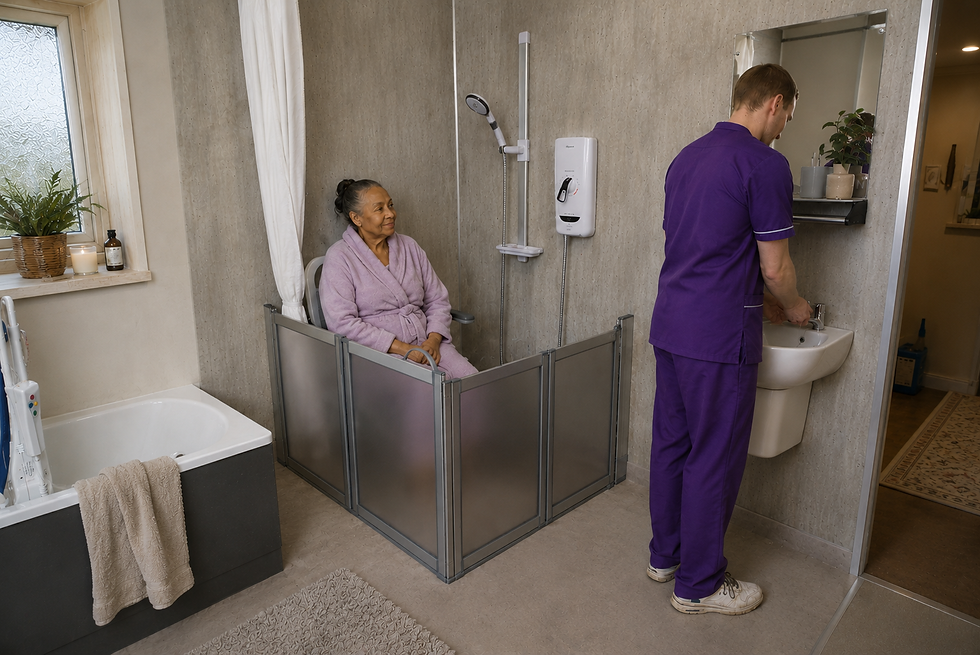
Supporting Carers Through Better Bathroom Design
The bathroom is often one of the most challenging areas of the home for both residents and carers. Poor layouts, inaccessible fixtures and inadequate support can increase the risk of accidents and make personal care difficult. Small changes can often have a significant impact. Examples include:
• Half height shower doors that allow carers to assist safely without entering the shower area
• Carer screens that improve access during personal care routines
• Mira Advance electric showers with large tactile controls and thermostatic safety protection
• Raised height toilets that make transfers easier and reduce physical strain
• Wall mounted basins that provide comfortable access when seated
• Adjustable shower stools that can be used at both the basin and within the shower area
These products help make everyday tasks safer, easier and more comfortable for everyone involved.
Supporting Dignity Through Inclusive Design
One of the biggest challenges carers face is supporting someone who may be reluctant to accept help. Many people associate adaptations with losing their independence. This can lead to resistance, even when support is clearly needed.

Invisible Creations grab rails were designed to address this challenge. Functioning as towel rails, toilet roll holders and bathroom accessories while also providing support, they help people maintain independence without creating a clinical environment. For many families, this discreet approach encourages earlier acceptance of support and reduces the risk of falls before a crisis occurs.
Wash and Dry Toilets Supporting Independence
Personal hygiene can become increasingly difficult as mobility changes. Wash and dry toilets can significantly reduce the need for hands on support from carers while helping residents maintain dignity and independence.

Solutions such as the Geberit AquaClean Mera Care and Closomat Palma Vita offer:
• Automated washing and drying
• Improved personal hygiene
• Reduced reliance on carers
• Greater privacy and dignity
• Support for ageing in place
For some households, these products can be life changing, helping people continue managing personal care independently for much longer.
Supporting Carers in Homes That Are Difficult to Adapt
Many carers are supporting loved ones in properties that present significant adaptation challenges. Some homes have upstairs only bathrooms. Others have limited space, narrow layouts or structural restrictions that make traditional adaptations difficult. These situations can create daily challenges for both the resident and the person providing care.
The TRU Cubicle was developed specifically for these circumstances. As a fully self contained shower and toilet facility, it provides a practical solution where a conventional wetroom or bathroom adaptation may not be possible.

The TRU Cubicle can help support:
• Hospital discharge
• End of life care at home
• Temporary adaptation needs
• Urgent care situations
• Properties with limited adaptation options
• Residents who cannot access their existing bathroom
Because it can be installed quickly and with minimal disruption, it provides immediate access to essential washing and toileting facilities when they are needed most. For carers, that can mean less physical strain, reduced stress and greater confidence that their loved one can continue living safely at home.
Creating Homes That Work for Everyone
Creating carer friendly communities is not about a single product or adaptation.
It is about designing homes that support changing needs over time, recognising the vital role carers play and providing solutions that improve independence, dignity and safety.
At PROCare, we work with housing associations, local authorities, occupational therapists and contractors across the UK to deliver accessible bathrooms, wetrooms and home adaptations that support both residents and carers. Because when homes work better for carers, they work better for everyone.
01942 206004